

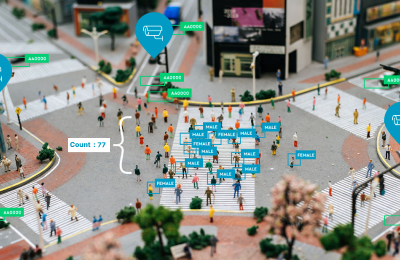
In an era dominated by data, video analytics stands out as a powerful tool for businesses and organizations across various sectors. From retail to healthcare, manufacturing to security, the applications of video analytics are vast and versatile. In this guide, we’ll delve into the world of video analytics, exploring its applications, opportunities, and the transformative potential it holds for businesses.
Understanding Video Analytics
AI Video analytics software involves the automatic interpretation of video content using algorithms to extract meaningful insights. It encompasses a range of techniques such as object detection, facial recognition, motion analysis, and behavior tracking. By harnessing the vast amounts of visual data captured by cameras, organizations can gain valuable insights into customer behavior, operational efficiency, safety, and security.
Applications of Video Analytics
Retail:
In the retail sector, video analytics can revolutionize the customer experience. By analyzing customer movements within stores, retailers can optimize store layouts, product placements, and signage to enhance engagement and increase sales. Furthermore, video analytics can enable retailers to track inventory levels, reduce theft through real-time monitoring, and personalize marketing efforts based on customer demographics and preferences.
Healthcare:
Video analytics has significant applications in healthcare settings, ranging from patient monitoring to security. In hospitals, video analytics can aid in patient monitoring, fall detection, and ensuring compliance with safety protocols. Additionally, video analytics can enhance security by identifying unauthorized access to restricted areas and monitoring for suspicious behavior in real-time.
Manufacturing:
In manufacturing environments, video analytics can improve operational efficiency and safety. By analyzing footage from production lines, manufacturers can identify bottlenecks, optimize workflows, and detect equipment failures before they escalate. Moreover, video analytics can enhance workplace safety by identifying hazards, enforcing safety protocols, and providing real-time alerts to workers and supervisors.
Transportation:
Video analytics plays a crucial role in transportation systems, particularly in traffic management and public safety. By analyzing traffic flow and congestion patterns, authorities can optimize traffic signals, reduce congestion, and improve overall road safety. Furthermore, video analytics can aid in the detection of traffic violations, monitor for accidents, and enhance the security of public transportation systems.
Security and Surveillance:
Perhaps the most well-known application of video analytics is in security and surveillance. By deploying advanced video analytics algorithms, organizations can detect and respond to security threats in real-time. Facial recognition technology can identify known individuals, while anomaly detection algorithms can flag suspicious behavior for further investigation. Moreover, video analytics can aid in forensic analysis, providing valuable evidence in criminal investigations.
Opportunities for Innovation
Artificial Intelligence:
The integration of artificial intelligence (AI) and machine learning algorithms has the potential to revolutionize video analytics. By training algorithms on large datasets, organizations can improve the accuracy of object detection, facial recognition, and behavior analysis, leading to more reliable insights and actionable intelligence.
Edge Computing:
With the proliferation of Internet of Things (IoT) devices, edge computing has emerged as a promising paradigm for video analytics. By processing video data locally on edge devices, organizations can reduce latency, conserve bandwidth, and enhance data privacy. Edge computing also enables real-time decision-making, allowing organizations to respond swiftly to events as they unfold.
Privacy Preservation:
As concerns about data privacy continue to grow, there is a growing need for video analytics solutions that prioritize privacy preservation. Techniques such as anonymization, encryption, and differential privacy can help mitigate privacy risks while still extracting valuable insights from video data. By adopting privacy-preserving techniques, organizations can build trust with customers and stakeholders while remaining compliant with regulatory requirements.
Integration with IoT:
The integration of video analytics with other IoT devices opens up new possibilities for innovation. By combining video data with sensor data from IoT devices such as smart cameras, environmental sensors, and wearable devices, organizations can gain a holistic view of their operations and environments. This integration enables more context-aware insights and predictive analytics capabilities.
Conclusion:
Video analytics offers a myriad of applications and opportunities for businesses and organizations across various sectors. From retail to healthcare, manufacturing to security, the potential for leveraging video data to gain actionable insights is immense. By embracing innovation, harnessing the power of artificial intelligence, and prioritizing privacy preservation, organizations can unlock the full potential of video analytics to drive efficiency, enhance safety, and improve the overall customer experience.


