

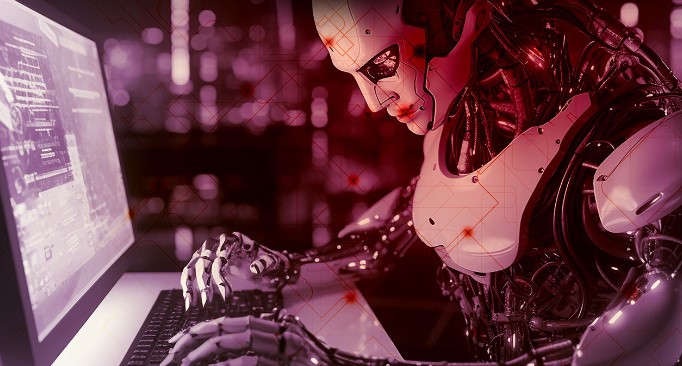
In today’s rapidly evolving world, artificial intelligence (AI) stands as a pivotal force propelling innovation and technological progress. As per Statista’s projections, the AI market is set to soar to $184 billion by 2024. From autonomous vehicles to personalized recommendations, AI is reshaping industries and redefining our lifestyles and professional endeavors. At the core of this transformative technology lies AI computing. Let’s delve deeper into its significance.
Understanding AI Computing
AI computing encompasses the specialized hardware and software systems engineered to handle the extensive data processing demands of AI applications. These encompass a spectrum of tasks including machine learning, natural language processing, and computer vision. Conventional computing systems often fall short in coping with the intricate calculations and algorithms necessitated by AI, thus necessitating the emergence of AI computing as a distinct and indispensable field.
The Vital Role of GPUs and TPUs
Graphics Processing Units (GPUs) and Tensor Processing Units (TPUs) stand out as two primary types of hardware integral to AI computing. GPUs excel in parallel processing tasks, making them optimal for training deep learning models. On the flip side, TPUs are tailor-made to accelerate machine learning workloads, renowned for their swiftness and efficiency.
The Ascendancy of AI Accelerators
Recent years have witnessed a surge in the development of AI accelerators—specialized chips and hardware fine-tuned for AI tasks. These accelerators are engineered to markedly enhance the speed and performance of AI workloads. Pioneering companies such as NVIDIA, Intel, and Google have spearheaded this innovation, pushing the boundaries of what’s achievable with AI computing.
Tracing the History of AI Computing
The roots of artificial intelligence can be traced back to Alan Turing, the British mathematician whose pivotal role in deciphering coded messages during WWII laid the groundwork for AI. Turing’s vision for a machine capable of learning from experience was articulated in a 1947 lecture in London. Fast forward to 2012, a milestone year marked by the development of AI models surpassing human capabilities in image recognition speed and accuracy. Over time, AI has made significant strides propelled by advancements in computing power and the availability of vast data resources. Despite facing some hurdles in the 1990s, AI continued its trajectory, culminating in milestones such as IBM’s Deep Blue defeating Garry Kasparov in chess in 1997.
AI Continues Its Evolution
Today, AI continues its rapid evolution, characterized by breakthroughs in neural networks and deep learning. The pursuit of artificial general intelligence, where machines emulate human cognitive abilities, remains a central focus of ongoing research. As AI becomes increasingly integrated into our daily lives, concerns surrounding trust, privacy, transparency, ethics, and the human element have emerged as significant considerations.
The Advantages of AI Computing
1. Enhanced Efficiency: AI streamlines repetitive tasks, amplifying efficiency and productivity.
2. Informed Decision-Making: AI analyzes vast datasets, furnishing valuable insights for data-driven decisions.
3. Precision: AI systems execute tasks with remarkable precision, minimizing human errors.
4. Swift Data Processing: AI swiftly processes extensive data volumes, facilitating rapid insights and predictions.
5. Personalization: AI algorithms tailor user experiences based on individual preferences, offering bespoke recommendations.
6. Automation of Complex Tasks: AI automates tasks necessitating human intelligence, freeing up resources for strategic endeavors.
7. Improved Customer Service: AI-powered chatbots deliver round-the-clock support, addressing queries and assisting with tasks.
8. Healthcare Advancements: AI aids in disease diagnosis, treatment planning, and drug discovery, enhancing healthcare outcomes.
9. Heightened Safety and Security: AI bolsters surveillance, threat detection, and cybersecurity measures.
10. Fueling Innovation: AI drives innovation across sectors, spawning new products, services, and solutions.
The Importance of Specialized Hardware in AI Computing Tasks
Specialized hardware plays a pivotal role in AI computing tasks for several reasons. Firstly, AI algorithms demand intensive computational power to process and analyze vast datasets. While general-purpose CPUs suffice for basic AI functions, they often lack the efficiency and speed required for complex workloads. Specialized hardware, including GPUs, TPUs, and ASICs, are tailored to optimize AI computations, delivering superior performance and energy efficiency.
Secondly, specialized hardware architectures excel at managing the parallel nature of AI algorithms. GPUs, for instance, boast thousands of smaller cores optimized for parallel processing, rendering them ideal for AI tasks involving extensive data and complex mathematical operations. This parallelization capability enables specialized hardware to execute computations hundreds of times faster than general-purpose CPUs, rendering them indispensable for AI workloads.
Moreover, specialized hardware significantly reduces the time and cost associated with algorithm training and execution. By harnessing optimized architectures and specific operations tailored to neural networks, hardware like TPUs and NPUs accelerate AI computations and enhance the performance of tasks such as image recognition and language processing.
Demystifying AI Computing Operations
1. Machine Learning Systems: AI computing involves machine learning systems and software analyzing vast data to uncover insights and develop new capabilities.
2. Hardware Optimization: Specialized hardware like GPUs and TPUs optimizes AI computations for high performance and energy efficiency.
3. Autonomous Learning: AI systems employ machine learning techniques to autonomously learn from and adapt to new data.
4. Visual Interpretation: Computer vision algorithms interpret visual information by analyzing images and objects.
5. Language Comprehension: Natural Language Processing (NLP) enables machines to comprehend human language, facilitating communication.
6. Neural Network Operation: Neural networks mimic human neural cells to process data and capture relationships between variables.
7. Task Automation: AI systems automate tasks, solve complex problems, and drive data-driven decisions across industries.
8. Ethical Considerations: It enhances human capabilities and productivity while posing ethical, social, legal, and security risks requiring responsible management.
Exploring the Limitations of AI Computing
1. Algorithmic Constraints: AI is constrained by algorithms and predefined instructions, lacking creativity, sentience, or consciousness.
2. Data Dependency: AI algorithms hinge on extensive data sets to learn and function effectively, making them reliant on data availability and quality.
3. Transferability Challenges: AI struggles to transfer knowledge across different domains, lacking the adaptability of human intelligence.
4. Ethical Considerations: AI raises ethical concerns regarding transparency, bias in data, and decision-making, necessitating careful consideration to ensure fairness and accountability.
5. Resource Intensiveness: Advanced AI algorithms demand high computing power and specialized hardware, posing accessibility challenges for smaller organizations and environmental concerns due to energy consumption.
6. Emotional Understanding: AI cannot comprehend or express human emotions, limiting its effectiveness in contexts requiring empathy or emotional intelligence, such as crisis management.
Envisioning the Future of AI Computing
The future of computing holds immense promise, propelled by advancements in machine learning, natural language processing, and neural networks. Anticipated developments encompass:
1. Enhanced Personalization: AI will facilitate highly personalized experiences across sectors like healthcare, retail, and entertainment by discerning individual preferences and tailoring services accordingly.
2. Ethical Considerations: With AI’s growing integration into society, ethical concerns such as data privacy, bias mitigation, and transparency will gain prominence in AI development. Striking a balance between innovation and responsible AI usage will be paramount.
3. Collaborative Dynamics: AI will collaborate with humans, augmenting their capabilities and supporting intricate decision-making processes rather than supplanting them. This collaborative synergy is poised to drive innovation and productivity.
4. Industry Transformations: AI computing stands poised to revolutionize diverse sectors:
a. Healthcare: AI-powered systems revolutionize
medical practices by analyzing data, aiding in diagnosis, predicting outcomes, and assisting in drug discovery.
b. Finance: AI algorithms analyze data fraud, automate trading, track financial data, and provide personalized investment advice, improving risk management, decision-making, and financial operations.
c. Manufacturing: AI-driven automation enhances efficiency, quality control, and predictive maintenance, reducing downtime and boosting productivity.
d. Customer Service: AI chatbots and virtual assistants elevate customer support, delivering instant responses and personalized recommendations, fostering greater satisfaction, faster responses, and cost savings for businesses.
e. Autonomous Vehicles: AI enables self-driving cars to perceive their surroundings, make decisions, and navigate safely, revolutionizing transportation, enhancing safety and efficiency, and paving the way for autonomous mobility services.
In Conclusion
AI computing emerges as a transformative force, reshaping industries and propelling innovation. It empowers greater efficiency, accuracy, and decision-making prowess through process automation, data analysis, and intelligent decision-making. As we navigate this transformative journey, responsible management of AI’s ethical, social, legal, and security implications becomes imperative.


