

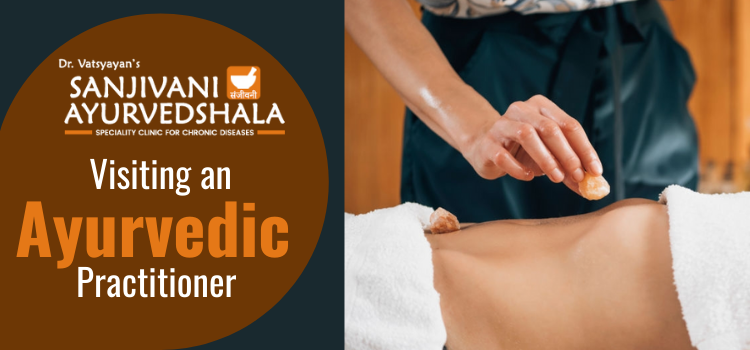
If you are about to visit an ayurvedic clinic in Ludhiana, you should be prepared to talk about yourself. An ayurvedic practitioner will question a lot about a lot of stuff (so be prepared), such as your daily diet, working conditions, profession, exercise routine, sexual relationships, and mental health.
Initial Examination
Usually, Ayurvedic examination consists of three parts as follow
Parts1- Darshana (observation): Just by looking at the patient, observing his movements, color of the skin, eyes, or facial lines, and qualities of lips, hair, and nails, An ayurvedic practitioner evaluates the general physical health of the patient.
Parts2- Sparsha (Touch): This part includes many practices and tests, laboratory testing comes in this part too. Some of the major practices, used by the ayurvedic practitioner are
- Sparshanam: Palpation, in modern English, means pressing down the body parts by the use of hands.
- Shrvanaa: Auscultation, listening to the sound produced by the internal organs.
- Akotana: Percussion or Tapping.
Part3- Prashna (Questions): At this phase, the questionnaire begins. The practitioner asks about quite a bunch of stuff (depending on the issue), like time duration of disease or discomfort, Workplace or work environment.
Some major Ayurvedic treatment
In Ayurveda, there are many types and categories of treatment available in its arsenal. Some of those treatments, which ayurvedic practitioners will be using are namely.
1. Herbs and herbal concoction
Knowing about the action and effectiveness of each herb by the herb’s ras (taste), virya (active potency), and vipak (post-digestive effects, it shows). This ancient administration practice is the key to ayurvedic medicines. And it requires quite a knowledge of the subject.
2. Panchakarma
This process is quite invasive and should be done only under the supervision of the trained Ayurvedic practitioner.
Panchakarma is a combination of many processes combined together aiming for the detoxification of the body, or for the removal of Ama (Toxin).
3. Diet and nutrition
Ayurveda gives quite a lot of attention to what we eat, as it is believed that most of the disease arrives through the stomach. Dietary habits are tailored for every individual. But in general, the diet should have a combination of all the six primary tastes of food.
Six tastes of food according to Ayurveda are considered as
- Sweet
- Sour
- Salty
- Pungent
- Bitter
- Astringent
Ayurveda emphasizes a lot on the fact that you should like the food you eat, and the diet you follow. As it is believed that till you don’t eat the food happily no matter how healthy the food is, it ain’t going to help your body.
4. Shirodhara
The process includes the dripping of medicated oil (Oil mixed with herbs) onto the forehead (“third eye region”) of the person receiving the treatment. This therapy is performed by a massage therapist under proper guidance.
Ayurveda’s approach to a disease
In Ayurveda, It is believed that the human body has all the required energy to fight back any disease on its own and bring the body to a healthy or balanced state.
So Ayurveda’s prime focus is to help the body to call upon its own energy to heal itself. Rather than just focusing on the treatment or medicine to get rid of the illness.


