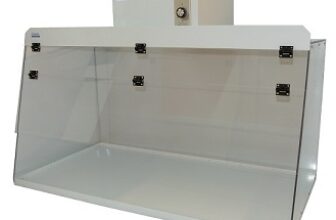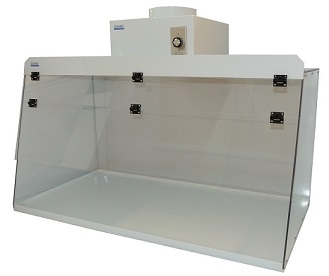
When laboratory space is limited, choosing the right fume hood requires more than measuring the available countertop. You need equipment that controls hazardous vapors, supports your daily procedures, and fits comfortably into your existing workflow. A well-selected benchtop fume hood helps you balance laboratory safety, usable workspace, ventilation requirements, and long-term operating costs without overcrowding your facility.
Measure Your Available Laboratory Space
Before comparing models, determine exactly where the fume hood will be installed. Measure the available width, depth, and height, including any overhead cabinets, shelving, and nearby equipment. Remember to account for service access, maintenance clearance, electrical connections, and ventilation ductwork where applicable.
Evaluate how the hood will affect movement around your laboratory. You should be able to access nearby instruments, open cabinet doors, transport samples, and perform routine tasks without obstruction. A compact footprint is valuable, but only when it accommodates your actual procedures.
Create a simple layout showing the hood, surrounding equipment, operator position, and required utilities. This helps you identify space conflicts before purchasing.
Practical tip: Compare the manufacturer’s external dimensions with the usable internal workspace. A compact hood may have limited working depth or height, which can restrict the equipment and containers you need to use.
Match Hood Design to Your Chemical Hazards
Your intended application should determine which fume hood you select. List the chemicals, solvents, reagents, and processes used in your laboratory. Consider their volatility, toxicity, corrosiveness, quantities, and potential for generating hazardous fumes.
A ducted fume hood captures airborne contaminants and exhausts them through a connected ventilation system. A ductless hood uses filtration designed for specific contaminants and applications. These systems are not automatically interchangeable.
Before selecting a model, verify that its design, airflow performance, and exhaust or filtration arrangements are appropriate for your procedures. Ductless systems require careful assessment of filter compatibility, breakthrough risks, replacement schedules, and chemical limitations.
Explore benchtop fume hoods for laboratory chemical vapor control to compare equipment options suited to your laboratory requirements.
Never assume a smaller hood provides adequate protection simply because it fits your available space. Confirm that the proposed equipment meets applicable safety requirements and your institution’s chemical hygiene procedures.
Evaluate Airflow and Safety Features
Airflow performance is one of the most important factors when evaluating a benchtop fume hood. The hood must capture and contain hazardous vapors under the operating conditions for which it is designed.
Review the manufacturer’s specifications for airflow requirements, face velocity where applicable, containment performance, sash configuration, and exhaust connection. Ask how performance will be verified after installation.
Look for features that support safe and consistent operation, including:
Sash design: A suitable sash helps establish the intended operating opening and provides a physical barrier.
Airflow monitoring: Appropriate indicators or alarms can alert operators to ventilation problems.
Lighting: Adequate illumination improves visibility during sample preparation and chemical handling.
Accessible controls: Clearly positioned controls make routine operation easier.
Cleanable surfaces: Chemical-resistant, smooth interior surfaces simplify cleaning and routine inspection.
The correct airflow specification depends on the hood design, applicable standards, and installation conditions. Avoid relying on a single advertised airflow number without reviewing the complete performance requirements.
Check Utility and Installation Requirements
A benchtop fume hood may require more installation planning than its size suggests. Ducted models need a compatible exhaust system, while some designs also require electrical connections, plumbing, or other utilities.
Confirm the following before ordering:
- Whether your existing exhaust system can support the hood’s airflow requirements.
- Whether duct routing is practical within your facility.
- Whether the workbench can support the equipment’s weight.
- Whether electrical outlets and other utilities are correctly positioned.
- Whether installation will interfere with HVAC operation or nearby workstations.
- Whether commissioning and airflow testing are required.
Consult your facilities team or a qualified ventilation professional to verify compatibility. Changes to room ventilation can affect overall building pressure and other laboratory exhaust systems.
For additional equipment options and laboratory supply information, visit Global Lab Supply for laboratory fume hoods and related equipment.
Compare Usability, Maintenance, and Total Cost
A low purchase price does not necessarily translate into lower ownership costs. Consider the hood’s expected service life, maintenance needs, energy consumption, installation expenses, and availability of replacement components.
Evaluate how easily operators can position equipment, clean internal surfaces, adjust the sash, and access routine controls. Make sure the working chamber accommodates your largest regularly used apparatus without blocking airflow pathways.
For ductless models, include filter replacement, disposal, and monitoring expenses in your calculations. For ducted systems, consider exhaust fan energy use, building ventilation requirements, inspections, and servicing.
Ask suppliers about warranty coverage, technical documentation, spare parts, and maintenance support. Comparing these details helps you assess long-term value rather than choosing solely by dimensions or initial cost.
Use a Practical Selection Checklist
Before making your final decision, compare shortlisted models against a consistent set of criteria.
| Evaluation criterion | What to verify |
| Available space | External dimensions and service clearances |
| Working capacity | Internal dimensions and equipment compatibility |
| Chemical suitability | Appropriate containment and material compatibility |
| Ventilation | Required airflow and exhaust compatibility |
| Safety features | Sash, monitoring, alarms, and visibility |
| Installation | Utilities, structural support, and commissioning |
| Maintenance | Inspection needs, service access, and replacement parts |
| Total cost | Purchase, installation, energy, and maintenance |
Prioritize safety and suitability before convenience or price. If a model cannot meet your laboratory’s hazard-control requirements, eliminate it from consideration even if its dimensions are ideal.
For help comparing configurations, contact our team for benchtop fume hood selection assistance. Share your available dimensions, intended chemical applications, and ventilation arrangements to make the evaluation more productive.
Frequently Asked Questions
1. What should you consider when choosing a benchtop fume hood for a small laboratory?
Evaluate available space, internal working dimensions, chemical compatibility, airflow performance, installation requirements, safety features, and maintenance costs. The hood must fit your workspace while providing suitable containment for your specific laboratory procedures.
2. Are benchtop fume hoods suitable for all chemicals?
No. Suitability depends on the hood design, chemical properties, concentrations, quantities, and operating conditions. Verify material compatibility and ventilation requirements before use. Specialized processes may require different containment equipment.
3. How do you determine the correct size of a benchtop fume hood?
Measure the installation area, required clearances, and largest equipment used during routine procedures. Compare these measurements with both the hood’s external dimensions and its usable internal workspace. Also confirm access to utilities and maintenance areas.
4. Is a ducted or ductless benchtop fume hood better for limited space?
Neither option is universally better. Ducted hoods require compatible exhaust infrastructure, while ductless models require validated filtration for the intended contaminants. Choose according to your hazards, facility capabilities, and maintenance requirements.
5. How often should you inspect a benchtop fume hood?
Follow the manufacturer’s instructions, applicable regulations, and your laboratory’s safety program. Inspections and performance testing should be conducted at the required intervals and after relevant installation or ventilation changes. Check for damaged components, airflow problems, and malfunctioning alarms before use.
Conclusion
Evaluating a benchtop fume hood for a space-constrained laboratory requires a careful balance of dimensions, chemical compatibility, airflow, installation, and operating costs. By assessing these factors before purchasing, you can select equipment that fits your workspace without compromising essential safety requirements.
Start by documenting your available space and laboratory hazards, then compare suitable models against a consistent checklist. When specifications or ventilation requirements are unclear, consult a qualified safety professional and an experienced laboratory equipment supplier before making your final selection.