Maintaining a sterile processing environment requires more than effective cleaning procedures and controlled air quality. Every surface in your workspace must support hygiene, contamination control, and efficient daily operations. Your laboratory tables play an important role because they hold instruments, processing equipment, containers, and materials throughout critical workflows. Choosing the wrong table can create cleaning challenges, increase contamination risks, and affect operational efficiency. By selecting the right stainless steel lab table, you can establish a durable, hygienic, and easy-to-maintain workspace that supports your sterile processing requirements.
1. Select the Right Stainless Steel Grade
Your first consideration should be the stainless steel grade. Different grades offer different levels of corrosion resistance, durability, and chemical compatibility.
For most sterile processing environments, 304 stainless steel is a common choice because it provides good corrosion resistance and supports routine cleaning. However, if your operations involve frequent exposure to aggressive cleaning agents, disinfectants, or chloride-containing chemicals, you may need to evaluate 316 stainless steel.
Consider these factors:
304 Stainless Steel: Suitable for many general laboratory and cleanroom applications.
316 Stainless Steel: Offers improved resistance to certain corrosive chemicals and chloride exposure.
Surface Quality: Smooth, nonporous finishes help simplify cleaning and reduce areas where contaminants can accumulate.
Always match the material grade to your cleaning chemicals, processing conditions, and facility requirements.
2. Evaluate Surface Finish and Cleanability
A stainless steel table should allow you to clean and disinfect the entire working surface without unnecessary difficulty.
Look for smooth, consistent finishes with minimal surface imperfections. Rough areas, scratches, exposed seams, and damaged edges can make cleaning more challenging.
When evaluating table finishes, consider:
- Smooth, nonporous work surfaces.
- Rounded or finished edges.
- Minimal crevices and unnecessary joints.
- Easy access to corners and undersides.
- Resistance to routine cleaning and disinfection procedures.
A well-finished table helps you maintain consistent sanitation practices and reduces opportunities for residue accumulation.
3. Choose the Appropriate Table Design
Your table configuration should match the activities performed in your sterile processing area. A suitable design improves accessibility, supports workflow organization, and makes routine cleaning easier.
Consider the following configurations:
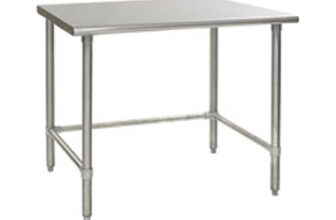
Flat-Top Tables: These provide open working surfaces for instrument preparation, packaging, and equipment placement.
Tables with Undershelves: These offer additional storage for approved supplies and accessories. However, ensure that stored materials do not interfere with cleaning or sterile workflows.
Tables with Backsplashes: These can help protect nearby walls from splashes and spills during appropriate processing activities.
Mobile Stainless Steel Tables: These provide flexibility when you need to move equipment or materials between designated work areas.
Before selecting a design, evaluate your processing sequence, available floor space, and cleaning procedures.
4. Determine the Correct Dimensions and Load Capacity
Your stainless steel laboratory table should accommodate your equipment without restricting movement or creating unnecessary workspace congestion.
Measure the available installation area before purchasing. Consider the table’s length, width, and working height based on the tasks performed by your operators.
Pay attention to:
- Equipment dimensions and placement.
- Available workspace for instrument handling.
- Operator reach and ergonomic positioning.
- Maximum expected equipment and material weight.
- Clearance for cleaning and maintenance.
Check the manufacturer’s rated load capacity rather than estimating how much weight the table can support. Also, consider whether the load is evenly distributed or concentrated in specific areas.
Selecting appropriate dimensions and structural support helps maintain workplace safety and operational reliability.
5. Prioritize Hygienic Construction
The construction quality of your table directly influences its suitability for sterile processing environments.
Look for welded construction, smooth joints, properly finished seams, and designs that minimize dirt-trapping spaces. Avoid unnecessary gaps and exposed components that make sanitation difficult.
You should also inspect:
- Weld quality and finishing.
- Leg and frame construction.
- Leveling feet and floor-contact components.
- Underside accessibility.
- Hardware and connection points.
For demanding sterile processing applications, prioritize designs that allow you to inspect and clean all accessible surfaces effectively.
6. Consider Mobility and Stability Requirements
Decide whether your workflow requires a stationary or mobile table.
Stationary tables are appropriate when you need a permanent workstation for instrument preparation, inspection, or equipment placement.
Mobile tables are useful when your processing activities require controlled movement between designated areas. If you choose a mobile configuration, evaluate the caster material, locking mechanism, and weight capacity.
Ensure that the wheels are suitable for your flooring and cleaning procedures. Locking casters should provide stability during operation.
Remember that mobility should support your established material flow rather than introduce unnecessary movement into controlled environments.
7. Match the Table to Your Sterile Processing Workflow
Not every stainless steel table is suitable for every processing activity. You should identify the specific tasks performed at each workstation before making a purchase.
For example:
Instrument Preparation: Requires sufficient working space and easy-to-clean surfaces.
Medical Device Packaging: Benefits from organized layouts and appropriate equipment clearance.
Sterile Supply Handling: Requires suitable material segregation and controlled workflow arrangements.
Laboratory Processing: May require chemical-resistant surfaces and equipment-specific load capacity.
Also, distinguish between clean, preparation, and sterile storage areas. A stainless steel table alone does not make a workspace sterile. Your facility must maintain appropriate environmental controls, validated cleaning procedures, and established contamination-prevention practices.
8. Compare Maintenance Requirements and Long-Term Value
Purchase price should not be your only consideration. A high-quality stainless steel table can provide long-term value through durability, maintainability, and reduced replacement frequency.
Before purchasing, evaluate the manufacturer’s specifications, warranty, construction quality, and maintenance recommendations.
Establish cleaning procedures that include compatible detergents and disinfectants. Avoid abrasive materials or chemicals that can damage the finish. Inspect the surface regularly for scratches, corrosion, damaged welds, and loose components.
Routine maintenance helps preserve the table’s condition and supports consistent hygiene practices.
9. Choose a Reliable Laboratory Furniture Supplier
Your supplier should understand the requirements of laboratory and cleanroom environments. Look for detailed product specifications, material information, customization options, and technical support.
Explore the Stainless Steel Lab Table collection to evaluate stainless steel laboratory furniture options for your workspace.
You can also learn more about CleaTech LLC and its laboratory and cleanroom equipment solutions.
Before finalizing your purchase, confirm the material grade, dimensions, load capacity, finish, and configuration. This helps ensure that your selected workstation meets your operational requirements.
Conclusion
Choosing the right stainless steel lab table for sterile processing requires careful consideration of material grade, surface finish, construction, dimensions, load capacity, and maintenance requirements. When you evaluate these factors together, you can create a hygienic and functional workspace that supports contamination-control procedures and efficient laboratory operations.
Prioritize tables designed for easy cleaning, long-term durability, and compatibility with your specific processing activities. A well-selected workstation can improve organization, simplify maintenance, and support consistent sterile processing practices.
Frequently Asked Questions
Why are stainless steel lab tables preferred for sterile processing?
Stainless steel lab tables offer durable, corrosion-resistant, and easy-to-clean surfaces. Their smooth construction supports routine cleaning and disinfection, making them suitable for many laboratory, pharmaceutical, and sterile processing environments.
Which stainless steel grade is best for sterile processing tables?
Grade 304 is suitable for many general laboratory applications, while grade 316 provides better resistance to certain corrosive chemicals and chlorides. Your choice should depend on chemical exposure and cleaning requirements.
What surface finish should you choose for a sterile processing table?
Choose a smooth, nonporous finish with minimal scratches, seams, and crevices. The surface should withstand your approved cleaning and disinfection procedures without deteriorating.
Are mobile stainless steel tables suitable for sterile processing areas?
Yes. Mobile tables can support flexible material handling between designated areas. Choose suitable casters, reliable locking mechanisms, and designs that allow effective cleaning and maintain workflow controls.
How do you maintain stainless steel laboratory tables?
Clean and disinfect the table using manufacturer-approved products. Avoid abrasive cleaning materials, inspect surfaces regularly, and address scratches, corrosion, or damaged joints to maintain hygienic working conditions.